



What should be done with photovoltaic modules once they’ve been removed from the roof? This question will be asked with increasing frequency over the coming years. The Müller-Guttenbrunn Group aims to provide a clear answer. That is why MGG Metrec (MGG Metall Recycling) in Amstetten is currently building an innovative plant for recycling end-of-life PV modules. The necessary technologies were developed by the Amstetten-based company 2ndCycle. The aim is to ensure that around 98 per cent of a silicon-based PV module is recycled to a high standard.
Photovoltaic modules have long been a mass-produced product. On residential buildings, commercial premises, agricultural sheds and open spaces, millions of modules generate renewable electricity. However, what is installed today will eventually have to be removed from the roof. And systems are already being dismantled – because modules are faulty, because hail has caused damage, or because older panels are being replaced with more efficient models.
This is creating a growing stream of materials that requires reliable and, above all, high-quality recycling pathways with the highest possible recycling rate. This is precisely where the Müller-Guttenbrunn Group is taking its next major step. Having worked intensively on the recycling of photovoltaic modules for years, MGG is now building its own PV recycling plant in Amstetten, operated by MGG Metrec, which is due to come on stream in 2027.
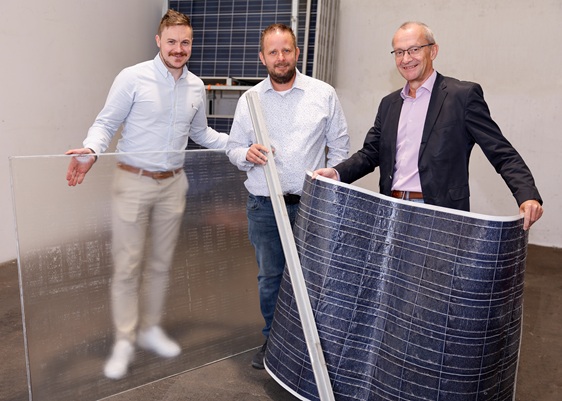
Joining forces: 2ndCycle founder and CEO Simon Prüller (left), Manuel Riedl from MGG Metrec and MGG CEO Christian Müller-Guttenbrunn (right) are optimistic about the future of PV recycling.
Its own PV recycling plant in Amstetten.
The key technologies for this come from 2ndCycle. This young start-up based in Amstetten, in which the Müller-Guttenbrunn Group holds a stake, has developed specialised machinery and processes to dismantle PV modules into their essential components as gently as possible. Patent applications have already been filed for key technical solutions.
For MGG CEO Christian Müller-Guttenbrunn, the key priority is to transform what has hitherto been a complicated waste disposal issue into a functioning circular economy: “The process must be straightforward for people and businesses. Anyone with old PV modules needs, above all, a clear answer to the question: ‘What should I do with them?’“
Careful dismantling is the foundation of recycling.
Not every module removed from a roof is automatically waste. Particularly in larger decommissioning projects, panels may still be in good technical condition and suitable for reuse. This is where 2ndCycle comes in. “We can already assess quite accurately whether a module is generally suitable for reuse based on its type, year of manufacture and technical specifications,” explains Simon Prüller, CEO of 2ndCycle. “However, we can only assess its actual condition once we’ve inspected it here at our plant. External damage or, for example, damage to the cells isn’t always visible beforehand.”
This is precisely why the modules should be handled with care right from the dismantling stage. Anyone who throws panels haphazardly into a skip or damages the glass surfaces is not only destroying a potential opportunity for reuse. A module that is as intact as possible is also essential for the subsequent high-quality recycling process. If reusing the modules does not make technical or economic sense, the newly developed recycling process begins.
An innovative process chain for separating modules into secondary raw materials.
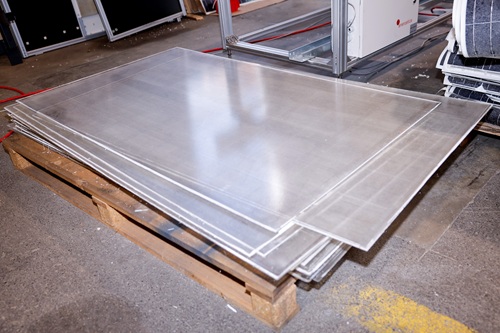
The largest fraction by weight in the recycling of PV modules is the glass panels, which can be recovered intact and, above all, without any significant contamination. The fact that the glass panes remain intact during delamination is a key advantage of the newly developed 2ncCyle process. This means they can undergo a further quality control check before the controlled glass breakage takes place.
As soon as they are fed into the new plant, the PV modules are identified and characterised using artificial intelligence. A robotic system enables automated handling and the removal of junction boxes and cables, regardless of their position. The module’s aluminium frame is then carefully removed. Whilst this may sound simple, it is technically quite challenging: the module is de-framed without causing the glass to break. The aluminium can then be returned to the material cycle as a high-quality secondary raw material.
This is followed by the process step that poses the greatest challenge in PV recycling: separating the intact glass from the layers applied to or bonded onto it. The glass accounts for by far the largest proportion by mass of a conventional PV module. If a module is simply shredded, the result is a glass fraction mixed with plastics, silicon and other materials. This makes high-quality recycling of the glass considerably more difficult. The new technology developed by 2ndCycle therefore takes a different approach. Through the targeted application of heat, the glass and coating are separated from one another. In the process, the glass is recovered as a fully intact pane, virtually free of adhesive residues. This is precisely where one of the key advantages of the new process lies. “By cleanly separating the individual layers of material, we create the conditions necessary for the glass, in particular, to be reused as a high-quality raw material,” explains Simon Prüller. The recovered glass can then be passed on in a clean state to appropriate glassworks or recycling partners. This increases its chances of being reused for high-quality applications, rather than merely being used in less demanding areas.
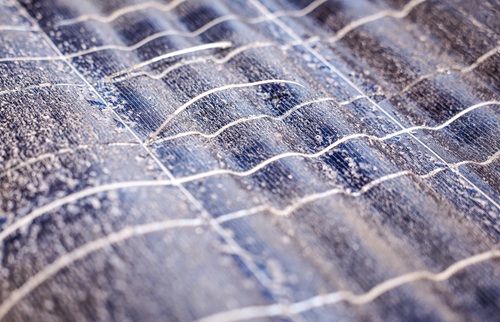
In addition to silicon, the separated film composite also contains metallic components such as copper and small amounts of silver. These fractions are separated and processed by MGG Metran in Kematen/Ybbs.
There are valuable materials in the coating.
What remains is the layer that was previously bonded to the glass. And this is precisely where further interesting raw materials are found. In addition to silicon, it contains conductor tracks and metallic components such as copper and small amounts of silver. These fractions are transported within the Müller-Guttenbrunn Group to MGG Metran in Kematen an der Ybbs, where they are separated and processed accordingly.
Ultimately, this process separates the key components of a PV module: aluminium from the frame, a large proportion of high-quality glass, and the fractions containing silicon and metals. “Above all, we want to make one thing clear: we have developed a method for recycling silicon-based photovoltaic modules in a clean and traceable manner,” says Manuel Riedl, Managing Director of MGG Metrec. “What matters is not just a high recycling rate, but that the resulting fractions are of the highest possible quality and can be put to good use within the recycling cycle.”
What to do with 20 old photovoltaic modules?
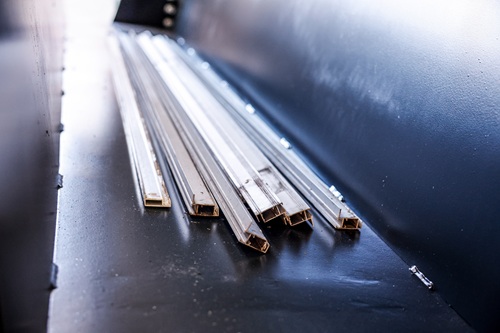
The aluminium frames of the PV modules are gently removed from the module without breaking the glass. This allows the aluminium to be returned to the material cycle as a high-quality secondary raw material.
The new technology is one thing. However, just as important is the question of how the end-of-life modules actually get to MGG Metrec’s new installation. And this is precisely where MGG aims to keep the process as simple as possible. A typical scenario: an electrical contractor is replacing an older PV system at a detached house. Twenty or twenty-five modules are removed from the roof. What next? First and foremost: dismantle the modules as carefully as possible and avoid breaking the glass. If pallets from the newly delivered modules are available, the old panels can be collected and secured on them.
“It has to remain straightforward,” emphasises Manuel Riedl. “For smaller quantities, a suitable pallet can be perfectly adequate. Above all, it is important not to throw the modules into a skip or damage them unnecessarily. Because only if they arrive at our facility intact can we recycle them optimally. Damaged modules can also be recycled, but this requires more effort and incurs higher costs.”
Get in touch with MGG Metrec!
The first point of contact for anyone wishing to dispose of PV modules is MGG Metrec in Amstetten – regardless of whether it involves just a few modules or a larger-scale decommissioning project.
The planned processing using the new facility is geared towards silicon-based PV modules. There are also other technologies, in particular so-called thin-film modules, for which there are currently no adequate recycling solutions. Visually, however, the distinction is not always clear to the untrained eye. For this reason, a photo of the type plate should be sent to MGG Metrec before delivery. Based on this information, it can be determined what type of module it is and whether it can be processed using the designated procedure at MGG Metrec.
The SolarBox offers the perfect transport solution.
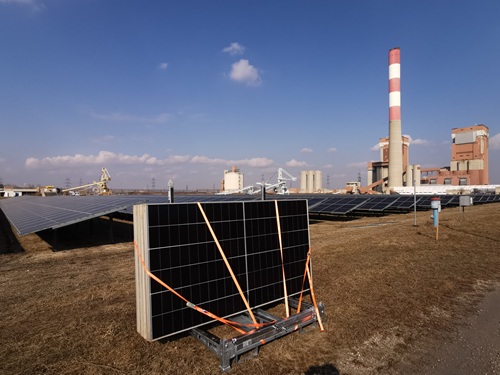
The SolarBox has already proven itself to be the perfect transport solution, and not just when dismantling large PV farms. Anyone who needs to move large quantities of used PV modules can purchase the flexible SolarBoxes from 2ndCycle.
For companies that regularly dismantle PV systems, as well as for larger decommissioning projects, 2ndCycle has also developed its own transport and storage solution: the SolarBox. The galvanised, reusable transport box was designed specifically for used PV modules. It is forklift-compatible and allows the panels to be stored in an organised and protected manner straight from the dismantling site. “The modules are placed directly into the box during dismantling, remain protected and do not need to be moved again later. If a company regularly dismantles systems, this simplifies the entire process considerably,” explains Simon Prüller. The box is reusable and can be used for various projects over the years. This creates a circular system for collection, temporary storage and transport, particularly for larger quantities or ongoing dismantling work. However, it is not compulsory. For smaller quantities, delivery on suitable pallets remains an option.
The most sensible solution for local authorities
However, alongside electricity companies, it is primarily local authorities, associations of local authorities and their recycling centres that often serve as the first point of collection for end-of-life PV modules. When private individuals retrofit their systems, replace individual modules following damage or re-cover entire roofs, the question ‘What to do with the old panels?’ often ends up at the local council or the recycling centre. There is not yet a standardised answer to this question everywhere. This is precisely why the Müller-Guttenbrunn Group sees a need for action here. From the recycling experts’ point of view, it is not essential for every single collection centre in Lower Austria to accept PV modules. However, there is certainly a need for regional and clearly communicated solutions. “Of course, we cannot set up a separate disposal structure for every single local authority,” says Christian Müller-Guttenbrunn. “But we can work with the associations to create reliable solutions. It is important that members of the public or local council offices know where modules are accepted and what happens to them afterwards.” One possible solution would be designated regional collection points where modules are collected safely and transported for processing at appropriate intervals.
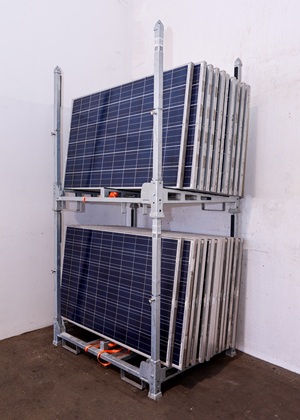
The SolarBox is also stackable and can be moved using any forklift truck.
Above all, the system must be simple for staff on site. “We cannot expect every member of staff at a collection centre to become a PV technician,” says Manuel Riedl. “That is why we need clear rules and simple procedures: leave the module as intact as possible, document the type plate and then pass it on via a defined route.”
The big wave is yet to come…
At present, the volume of old PV modules is still relatively manageable. But that is set to change. The major waves of photovoltaic expansion in Austria did not take place long enough ago for significant quantities of end-of-life modules to have accumulated yet. At the same time, modules are increasingly being replaced not only due to technical faults. So-called repowering projects are also playing a role. Although older modules still function, they are being replaced by new panels with significantly higher output. As a result, the volume of modules that must be either reused or recycled will grow steadily in the coming years. “The big wave is only just on its way,” says Christian Müller-Guttenbrunn. “How significant it will be in any given year depends on many factors – from technical developments and subsidies to the price of electricity. One thing is certain, however: the volumes will rise.”
For the Müller-Guttenbrunn Group, this is therefore exactly the right time to develop and establish the necessary structures. Over the coming months, a research question will thus be transformed into a concrete industrial process. Taking in used modules, identifying potential candidates for reuse, separating the aluminium frames, recovering high-quality glass and further processing the remaining recyclable fractions. Or to put it simply: at MGG, valuable raw materials are recovered from old solar installations. And in future, the question ‘What should I do with my old PV modules?’ should have as simple an answer as possible: ‘Ask MGG Metrec!’
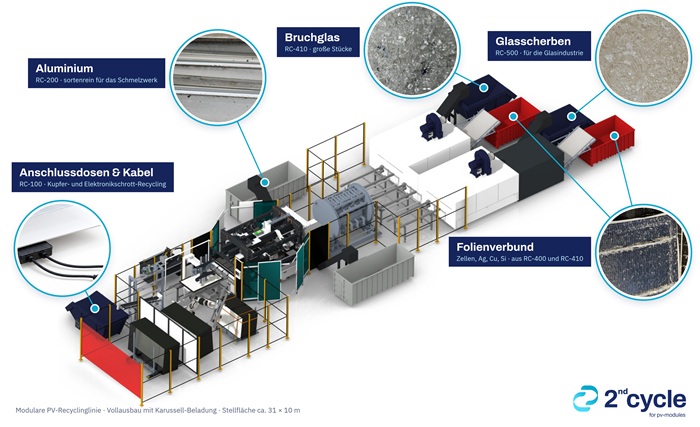
A rough diagram of the recycling plant for used photovoltaic modules newly developed by 2ndCycle: The modules are delivered at one end and, during the process, are separated into junction boxes and cables, aluminium profiles, the film laminate and the glass. After delamination from the film laminate, the intact glass panes are checked once more and then broken in a controlled manner, as the glass is logistically easier to handle as bulk material (broken glass or glass shards).